Dr. Grace E. Mueller
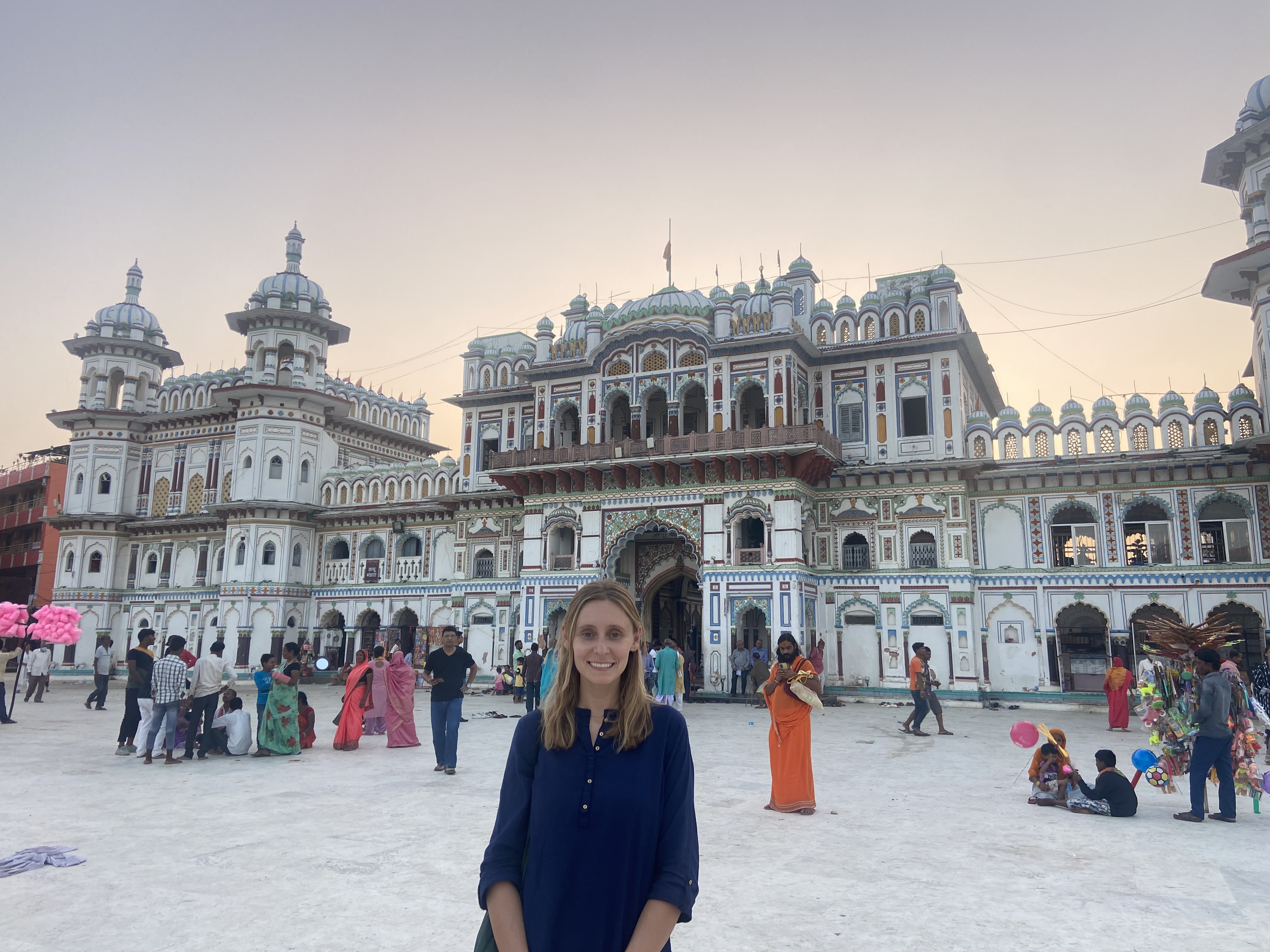
I am an economic geographer studying work, employment and the social regulation of labor markets using co-produced, qualitative methods.
The goal of my research is to better understand how labor markets work from the perspective of marginalized, informal workers. Themes of interest include everyday mobilities, the social construction of value and skill, social reproduction, climate change and the political economy of labour market knowledge.
Publications and Methods
My published and ongoing work uses inclusive qualitative methods to examine the labour process among workers frequently excluded from dominant labor market knowledge. I have conducted research with domestic workers, rural entrepreneurs, young mothers, and waste pickers across Nepal (2020–25), Indonesia (2020–21), and Bangladesh (2019).
These projects include collaborations with the Asian Development Bank, Restless Development, E-SheBee Social Enterprise and the University of Edinburgh.
Methods I use include work-life histories, diary methods, semi-structured interviews, focus group discussions, and creative and visual methods.
2025
“Domestic Work and Unfreedom: Theorizing Capitalist Variegation within South Asia” – for Progress in Human Geography
“Being Dignified: Understanding Socio-Spatial Exploitation and Agency in Nepali Domestic Work” – PhD Thesis Embargoed in the University of Cambridge Online Library. Request Access.
“Entrepreneurship As Struggle: The Crises and Politics of Entrepreneurial Becomings” in Economic Anthropology with Huang, J.Q., Bassett, J., Chisholm, P. and Geary, H. Open Access.
2024
“Caring Through Translation: A Dialogue on Ethics and Inclusivity in Cross Language Research” in the International Journal of Qualitative Methods (Peer Reviewed) with Baniya, A. Open Access.
“Mortgaged futures: fractured livelihoods and youth debts during COVID-19 – 2024” in Journal of Youth Studies (Peer Reviewed) with Barford, A., McCarthy, G., Osborne, H., Pratiwi, A. M., Pradhan, K., & Shrestha, S. Open Access.
2023
“Disaster Diaries: Qualitative Research at a Distance” in International Journal of Qualitative Methods (Peer Reviewed) with Barford, A., Osborne, H., Pradhan, K., Proefke, R., Shrestha, S. and Pratiwi, A.M. Open Access.
Policy and Public Engagement
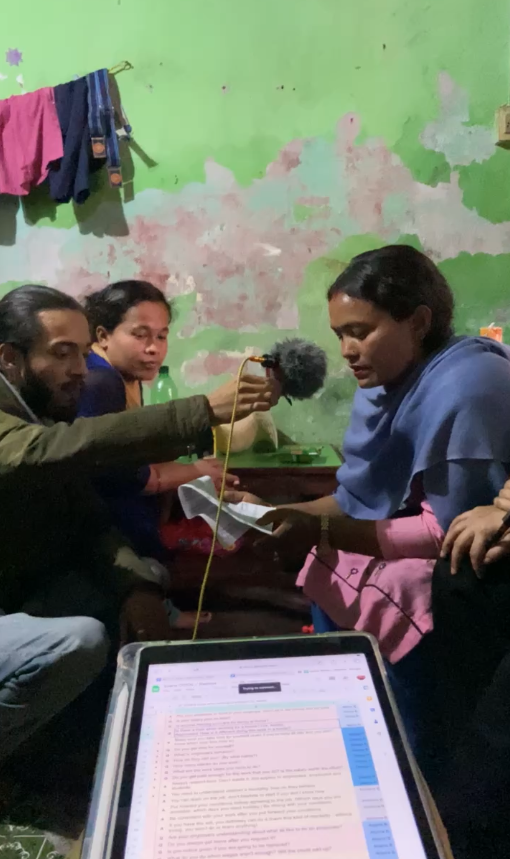
Short Film: “Didilai Didiko Sandesh”
This is a 4-minute short film co-produced with domestic workers in urban Nepal, written as a letter from domestic worker to domestic worker. The film has been selected for the 2024 Cambridge Creative Encounters cohort; 2024 Film Geographies AAG and 2026 RGS-IBG Film Geographies.
Watch on Facebook here.
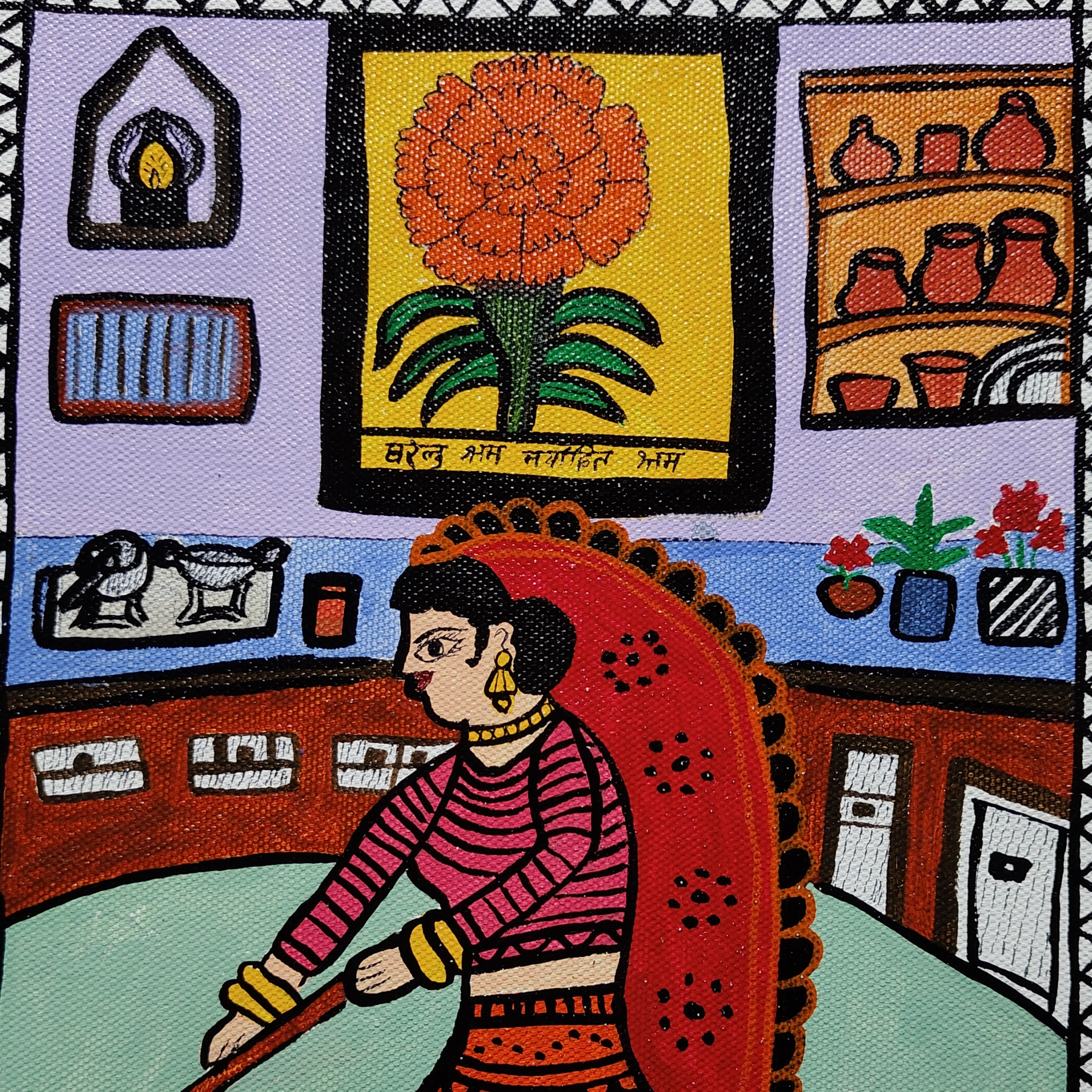
Artist Collaboration: “Domestic Work is Decent Work” with Dami Arts
Four canvas illustrations co-developed with Dami Arts correspond to key findings of my 2025 doctoral research “Being Dignified: Understanding Socio-Spatial Exploitation and Agency in Nepali Domestic Work.” We are pitching this artwork to galleries in Kathmandu with findings summaries as an additional avenue for public engagement.
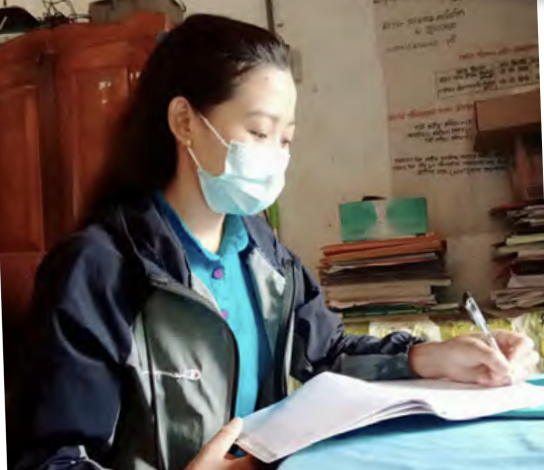
Pilot Diary Study: “Youth in a time of crisis: Livelihood diaries from Nepal and Indonesia during COVID-19”
This study pioneered a remote and youth-led diary study understanding employment exclusion during a time of COVID-19 mobility restrictions. The report summarizes key policy recommendations from over 1400 diary entries by young workers in Indonesia and Nepal.
Read the report here.
Governing the Invisible: Data Systems under economic transition
My next project examines how the production of economic data shapes labour market participation among long-term job seekers. I examine how digital data practices within employment centers recognize or misrecognize workers’ lived experiences, determine welfare participation and shape governance outcomes in the context of economic transition.


Teaching
Geographies of Employment
This course examines labor relationships in the 21st century. It analyzes labor market inequality across the Global North and South through labor market institutions, welfare and workfare states and the decent work agenda.
Development Policies and Practices
This course examines approaches to development from post-WWII to the present day, critiquing the concept of ‘development’ and balancing political economy approaches with ethnographic accounts of wellbeing, value and diverse economies research.
Qualitative Methods
This course explores a range of qualitative research methods and the ethical and practical implications of qualitative fieldwork for human and physical geography. It is grounded in feminist theories of care, epistemic justice, and co-production.

